

When Congress passed the SECURE Act in 2019, it changed one of the most important estate planning tools available to retirement account beneficiaries.
For decades, many heirs could “stretch” inherited IRA distributions over their lifetimes, allowing assets to continue growing tax-deferred while spreading out the tax impact. Today, most non-spouse beneficiaries face a much different reality: the 10-year rule.
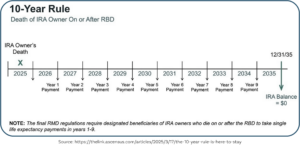
If you expect to leave retirement assets to your children, grandchildren, or other loved ones, understanding this rule is an important part of your long-term financial and estate planning strategy.
What Is the 10-Year Rule?
The 10-year rule applies to most inherited retirement accounts when the original account owner dies after January 1, 2020.
Under the rule, many beneficiaries must fully withdraw the balance of an inherited retirement account by December 31 of the 10th year following the original owner’s death.
The rule generally applies to:
- Traditional IRAs
- Roth IRAs
- 401(k) plans
- 403(b) plans
- Other qualified retirement accounts
Importantly, beneficiaries are not necessarily required to withdraw the same amount each year. Instead, they have flexibility over when withdrawals occur, provided the account is emptied by the end of the 10th year. During that period, investments can continue to grow tax-deferred (for traditional retirement plans) or tax-free (for Roth IRAs/Roth 401(k)s).
Recent IRS guidance has clarified how these rules apply in various situations, bringing greater certainty for retirement account beneficiaries and their advisors.

Why the Rule Matters
For many families, the biggest challenge is not the rule itself. It’s the tax consequences that can come with it.
Consider a child who inherits a large traditional IRA during their peak earning years. Any distributions from that inherited account are generally taxable as ordinary income. Depending on the account size and the beneficiary’s income level, required withdrawals over a 10-year period could push them into higher tax brackets.
This creates a planning challenge that many families have never had to address before.
The 10-year rule has made tax projections more important than ever. Beneficiaries may need to evaluate:
- Current and future tax brackets
- Expected income over the next decade
- Timing of retirement
- Other major financial events that could affect taxable income
Thoughtful withdrawal planning can help reduce unnecessary tax burdens and create greater flexibility for beneficiaries.
Who Must Follow the 10-Year Rule?
In most cases, the rule applies to non-spouse beneficiaries, including:
- Adult children
- Grandchildren
- Many trusts
- Other non-spouse individuals
For these beneficiaries, the ability to stretch distributions over a lifetime has largely been eliminated.
Who Is Exempt?
Certain individuals may still qualify for more favorable distribution treatment as Eligible Designated Beneficiaries (EDBs).
These may include:
- Surviving spouses
- Minor children of the account owner (until they reach the age of majority)
- Individuals with disabilities
- Chronically ill individuals
- Beneficiaries who are less than 10 years younger than the deceased account owner
Because the rules surrounding EDBs can be complex, it’s important to work with qualified tax and estate planning professionals when evaluating beneficiary options.
Planning Strategies to Consider
While no strategy is right for everyone, there are several ways retirement account owners may be able to reduce the future tax burden on beneficiaries.
 Roth Conversions
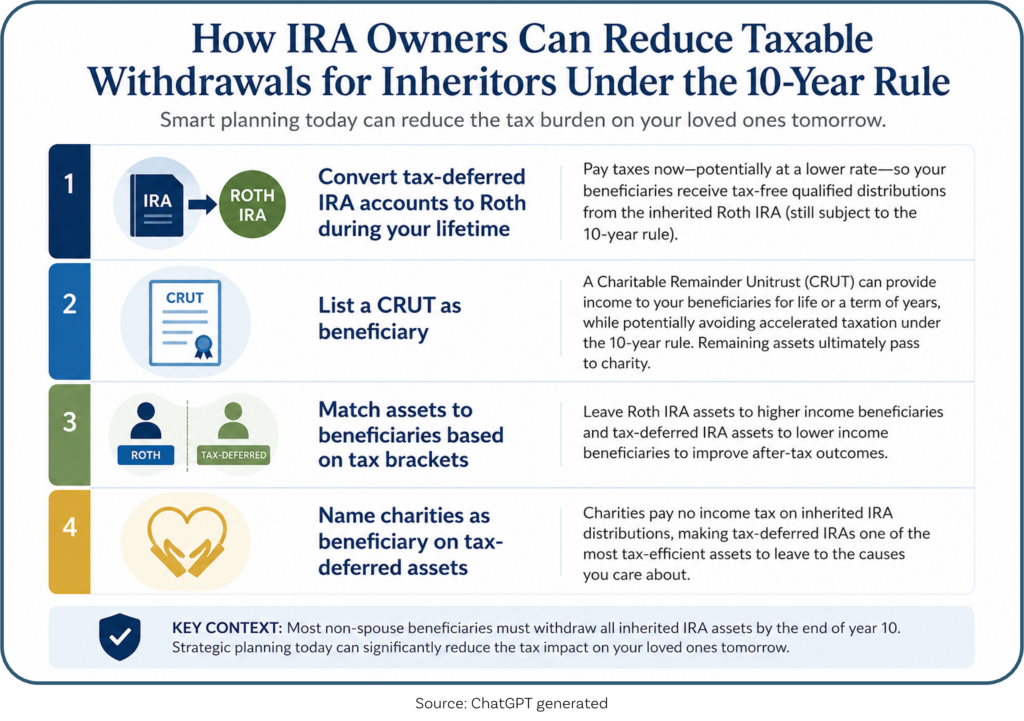
Converting traditional IRA assets to a Roth IRA during your lifetime may allow future beneficiaries to inherit assets that can be withdrawn tax-free, subject to applicable IRS rules.
For many families, gradual Roth conversions during lower-income years can be an effective long-term planning strategy.
You can learn more about tax-aware retirement planning in our article on retirement income strategies titled Understanding Roth Conversions: When and Why They May Make Sense.
Strategic Beneficiary Designations
Not all beneficiaries face the same tax situation.
In some cases, it may make sense to leave Roth assets to beneficiaries in higher tax brackets and traditional IRA assets to beneficiaries in lower tax brackets. This can help improve after-tax outcomes across the family.
Charitable Planning Opportunities
Individuals with philanthropic goals may consider naming charitable organizations as beneficiaries of tax-deferred retirement assets.
Because qualified charities generally do not pay income taxes on inherited retirement account distributions, this strategy can improve the overall tax efficiency of an estate plan.
Some families may also explore charitable remainder unitrusts (CRUTs) as part of a broader legacy planning strategy. You can explore more in our article on Smart Giving: How Strategic Philanthropy Builds Legacy and Reduces Taxes.
The Bottom Line
The 10-year rule has fundamentally changed how inherited retirement accounts are managed and distributed.
For retirement account owners, beneficiary designations, Roth conversion opportunities, and estate planning decisions now carry greater importance than ever. For beneficiaries, thoughtful distribution planning can help avoid unexpected tax consequences over the 10-year withdrawal period.
While the rule may seem straightforward on the surface, the financial impact can vary significantly from one family to another. Taking time to understand these changes today can help create more flexibility and better outcomes for future generations.
If you’d like to discuss how the 10-year rule may affect your retirement or estate planning strategy, the Carlson Investments team is here to help. Contact us to start a conversation: https://carlsoninvest.com/contact/
Carlson Investments does not provide tax, legal, or accounting advice. This content has been written for informational purposes only. Always consult your individual tax, legal, or financial professionals for advice tailored to your situation.
Let's Talk
Finding a better way doesn’t start with you learning about investment strategy. It starts with us learning about you.
Let’s get started.
Contact Us