

When investors look at the performance of their portfolio, the first instinct is often to focus on price. Did the stock go up? Did the bond hold its value?
While price changes matter, they only tell part of the story. A more complete way to evaluate an investment is by looking at total return, a metric that captures the full picture of how an investment performs over time.
What Is Total Return?
Total return includes three components:
- Capital appreciation — the change in the investment’s price
- Income — dividends from stocks or interest from bonds
- Reinvestment of that income over time
In simple terms: Total Return = Price Change + Income + Reinvestment of Income
By including all three components, total return provides a more accurate view of how an investment contributes to long-term portfolio growth. For example, two investments might show similar price appreciation. But if one generates income that is reinvested, the compounding effect can produce meaningfully higher long-term returns.

Why Income Matters More Than Many Investors Realize
Many investors mentally separate investments into two categories:
- Growth investments, such as stocks focused on capital appreciation
- Income investments, such as bonds that generate interest payments
In reality, most investments include elements of both.
Some growth stocks pay dividends. Some bonds can appreciate in value if purchased below par or if interest rates move favorably. Because of this overlap, focusing on price alone can lead to an incomplete understanding of performance.
Total return brings these pieces together and shows how the entire investment is working for you.
The Power of Reinvestment
One of the most important aspects of total return is the assumption that income is reinvested rather than left idle. When dividends or interest payments are reinvested, they begin generating returns of their own. Over time, this compounding effect can significantly influence portfolio growth.
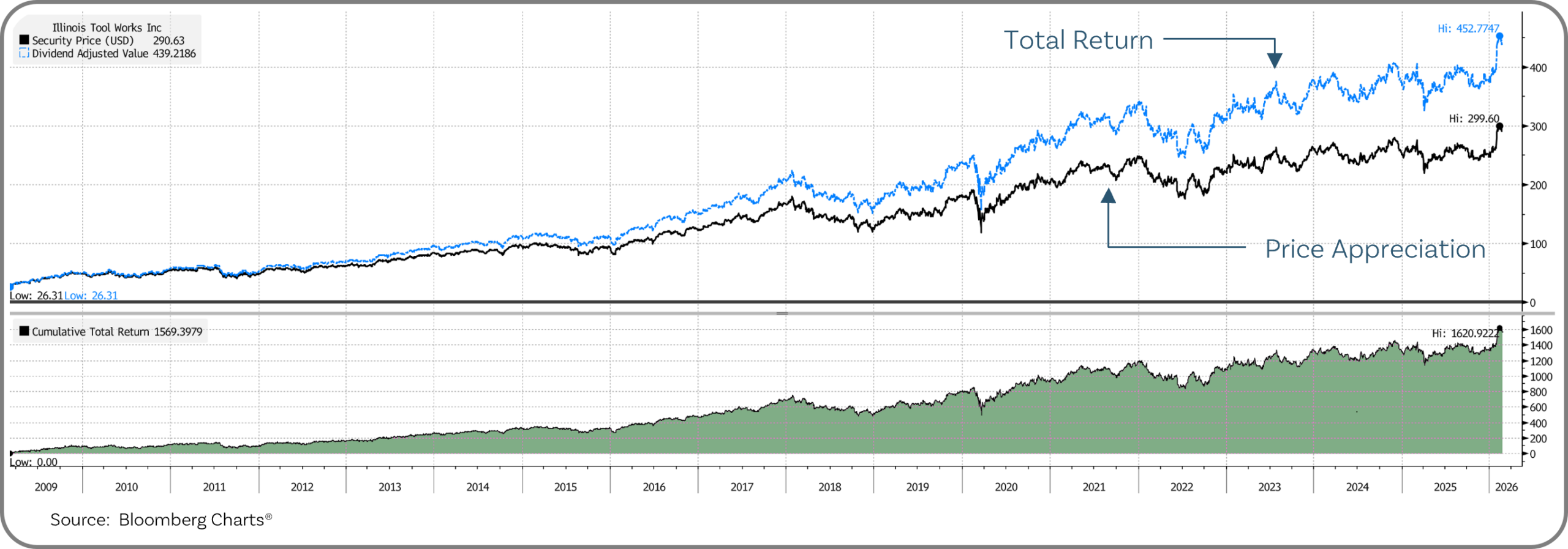
The chart below shows the compounding effect for Illinois Tool Works (ITW) over a 17-year period. The price change for this stock was 1,005%. But when adding the compounding effect of dividend reinvestment, the total return was 1,569%! The difference doesn’t appear significant in the early years but is very impactful over the long haul.
Comparing Investments on Equal Footing
Total return also allows investors to compare different types of investments on a more equal basis.
For example, a stock with strong price appreciation but little income may appear superior at first glance. But when dividends from another investment are reinvested over time, the total return comparison may look quite different.
For this reason, investment performance is typically reported as annualized total return, making it easier to compare investments across different timeframes.
The Bottom Line
Understanding total return helps investors see the full impact of their investments. By accounting for price appreciation, income, and reinvestment, it provides a more complete measure of performance and long-term wealth creation.
At Carlson Investments, we believe that informed investors make stronger financial decisions. If you would like to discuss how total return fits into your investment strategy, we welcome the opportunity to connect. You can start the conversation by visiting our contact page.
Carlson Investments does not provide tax, legal, or accounting advice. This content has been written for informational purposes only. Always consult your individual tax, legal, or financial professionals for advice tailored to your situation.
Let's Talk
Finding a better way doesn’t start with you learning about investment strategy. It starts with us learning about you.
Let’s get started.
Contact Us