

Every few months, the U.S. Treasury yield curve seems to make headlines. Financial commentators debate whether it’s flattening, steepening, or inverting, often suggesting these movements signal something important about the economy.
If you’ve ever wondered what all of that actually means, you’re not alone.
The Treasury yield curve is one of the most closely watched indicators in the financial world. Understanding the basics can provide helpful context for the economic news you read, the interest rates you encounter, and the investment decisions you make.
What is the Treasury Yield Curve?
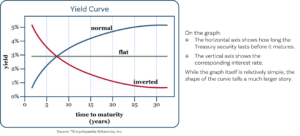
Simply put, the Treasury yield curve is a graph showing the interest rates, or “yields,” on U.S. Treasury securities with different maturity dates, from a few months to 30 years.
The U.S. Treasury publishes these rates every business day, and they serve as a benchmark for many other interest rates throughout the economy. Mortgage rates, auto loans, business loans, certificates of deposit (CDs), and even savings account rates are all influenced, directly or indirectly, by Treasury yields.
You can view the current Treasury yield curve on the U.S. Department of the Treasury’s website.
The “Normal” Yield Curve
Under typical economic conditions, the yield curve slopes upward. In other words, investors generally receive higher interest rates for lending money over longer periods than they do for short-term loans.
Why?
The longer money is committed, the greater the uncertainty. Investors typically expect additional compensation for taking on that added time and risk.
An upward-sloping yield curve is often associated with:
- Steady economic growth
- Moderate inflation
- Healthy lending conditions
- Confidence in the economy
This environment generally benefits consumers and businesses alike. Banks can lend profitably, businesses often have greater access to capital, and borrowing costs tend to remain relatively stable.
When the Curve Begins to Flatten
 Like any market indicator, the yield curve changes over time.
A flattening yield curve means the difference between short-term and long-term interest rates is becoming smaller. This can happen because short-term rates are rising, long-term rates are falling, or some combination of both.
There isn’t one single cause. Instead, a flatter curve often reflects changing expectations about the economy.
Factors that can influence the curve include:
- Federal Reserve policy
- Inflation expectations
- Economic growth forecasts
- Major geopolitical events
- Significant fiscal or regulatory changes
A flatter curve doesn’t necessarily indicate trouble ahead. It simply tells us that investors are reassessing where the economy may be headed.
Implications of an Inverted Yield Curve
One of the most talked about market signals is an inverted yield curve, where short-term Treasury yields become higher than longer-term yields.
Historically, inverted yield curves have often preceded economic slowdowns or recessions. However, they are not guarantees, nor do they tell us exactly when economic conditions may change.
In fact, the yield curve often begins returning to a more normal shape well before a recession officially begins or ends.
That’s an important reminder that markets are constantly looking ahead. By the time economic news reaches the headlines, investors have often been adjusting their expectations for months.
Why It Matters Beyond the Bond Market
Although the Treasury yield curve is often discussed by economists and investment professionals, its effects reach well beyond Wall Street.
Changes in Treasury yields influence many aspects of everyday financial life.
For example:
- Mortgage rates are generally influenced by intermediate and longer-term Treasury yields.
- Savings accounts and money market rates tend to move more closely with short-term interest rates.
- Businesses often borrow based on Treasury rates plus an additional premium that reflects their credit quality.
For investors, changes in the yield curve can also affect different areas of the stock and bond markets. Certain industries may benefit more than others depending on where the economy sits within the business cycle.
Understanding these relationships doesn’t mean trying to predict what markets will do next. Rather, it helps provide context for why financial markets respond the way they do.
If you’d like to learn more about the role bonds play in a diversified portfolio, you may also enjoy our articles “Bonds Are Back: Your Primer on the Bond Market” and “A Breakdown of Bonds & Fixed Income Market Options.”
One Indicator, Not the Whole Story
Journalist Charles Dow’s widely respected Dow Theory posits that a market trend remains in effect until a clear reversal is established. While that observation still resonates today, it’s important to remember that no single market indicator can predict the future with certainty.
The Treasury yield curve is valuable because it reflects what financial markets collectively expect, not because it guarantees a particular outcome.
Professional investment decisions are rarely based on one piece of information alone. Interest rates are just one consideration among many, alongside corporate earnings, inflation, employment, consumer spending, valuations, and countless other economic factors.
As we discussed in our article “Reading the Markets: Why Expectations, Trends, and Contrarian Thinking Matter,” markets are constantly adjusting to new information. Understanding those shifts can help investors maintain perspective without reacting emotionally to every headline.
Keeping the Bigger Picture in Focus
The Treasury yield curve deserves the attention it receives because it offers meaningful insight into how markets view the economy. But like any indicator, it is most useful when viewed as part of a broader investment picture.
At Carlson Investments, we believe that understanding the why behind market movements is just as important as following the headlines themselves. Helping clients make sense of complex financial topics is part of how we build long-term relationships rooted in education, transparency, and thoughtful guidance.
If you’d like to discuss how today’s interest rate environment fits into your long-term financial plan, contact the Carlson Investments team. We’d be happy to start the conversation.
Carlson Investments is a Concord, New Hampshire-based financial advisor and investment manager.
Carlson Investments does not provide tax, legal, or accounting advice. This content has been written for informational purposes only. Always consult your individual tax, legal, or financial professionals for advice tailored to your situation.
Let's Talk
Finding a better way doesn’t start with you learning about investment strategy. It starts with us learning about you.
Let’s get started.
Contact Us